In India, the enquiry almost never arrives as an email. It arrives on WhatsApp, usually as three words and a photo, usually after hours. Which is why almost every business we work with is already running on the free WhatsApp Business app — and why almost every one of them eventually asks the same question: do we need the API?
The honest answer is that most businesses don't, right up until the day they very obviously do. Here is where the line actually sits.
What the free app already does well
The WhatsApp Business app is more capable than people give it credit for. It costs nothing, it takes ten minutes to set up, and it covers a genuine amount of ground:
- A business profile with your address, hours and website
- Labels, so enquiries can be sorted into new, quoted, closed
- Quick replies for the answers you type forty times a week
- Greeting and away messages outside working hours
- A catalogue, so you can send products without a PDF
If one person handles enquiries and the volume is manageable, this is the right tool. Adding infrastructure to it would be a cost with no return. Do not let anyone sell you an integration for a problem you don't have yet.
Where it breaks
The free app is built around one number on one phone. Every limitation that matters comes from that single design decision.
- Two people can't work the same inbox properly — someone ends up shouting across the office about who replied
- There's no routing: sales, service and accounts all land in the same thread
- Nothing syncs to your CRM, so the history lives on a device that can be lost, sold or resigned with
- Automation stops at canned replies — nothing can react to an order status or a payment
- You can't send a proactive update to 400 customers without it looking like spam, because it is
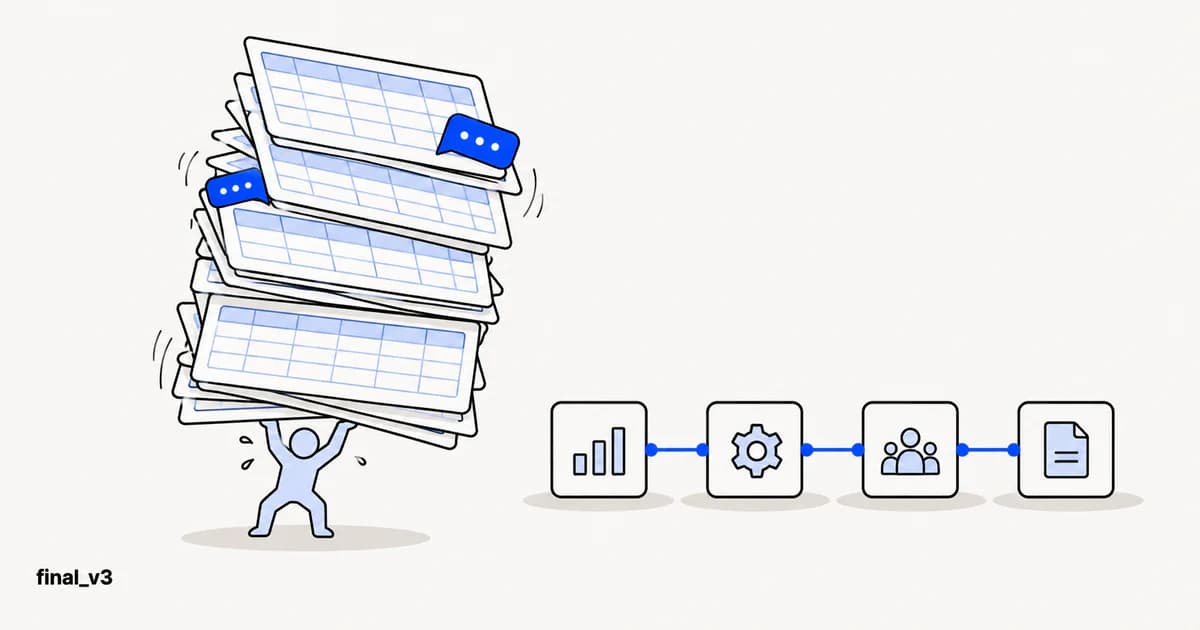
The usual tell is a business that has started keeping a parallel spreadsheet of WhatsApp enquiries so nothing gets lost. That spreadsheet is the symptom. The app has stopped being the system.
What the API changes
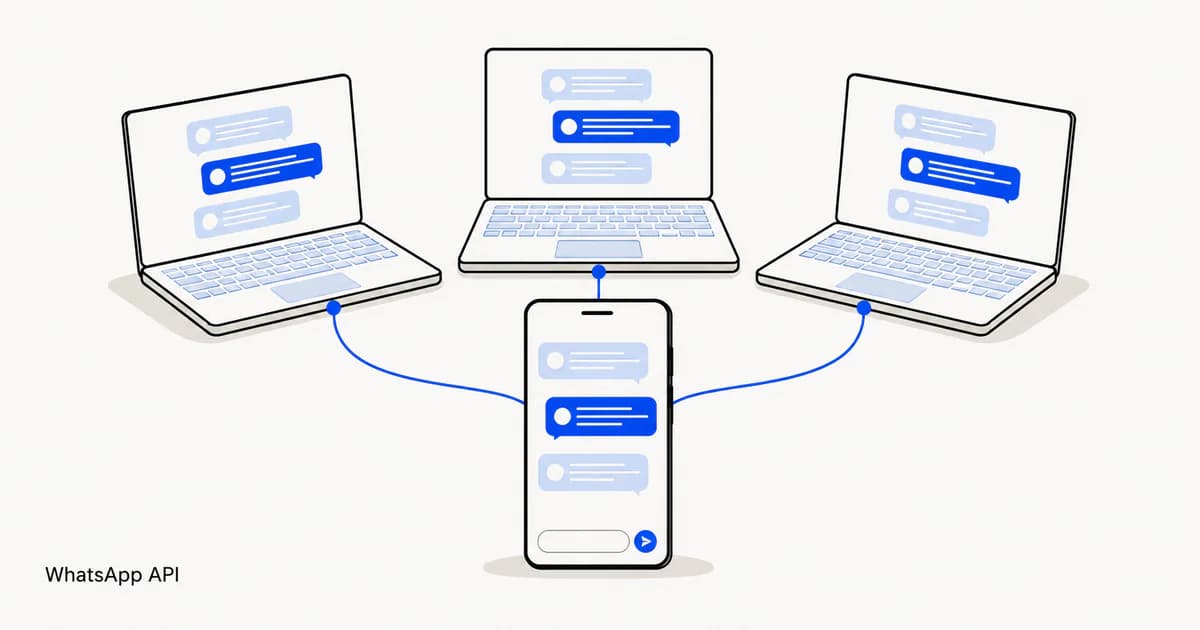
The WhatsApp Business Platform — what everyone calls the API — is not an app. There is no interface. It is a connection between WhatsApp and something else: a shared inbox tool, your CRM, or software built for the way you work. That distinction is the whole point.
- Several agents on one number, with conversations assigned rather than fought over
- Enquiries routed by what the customer picked, not by who noticed first
- Every message written into the customer's record automatically
- Automated messages triggered by real events — order confirmed, payment received, delivery out
- Outbound campaigns to customers who opted in, sent as approved templates
The gain is not that WhatsApp gets smarter. It's that WhatsApp stops being a separate island from the rest of your business.
What it costs you
Three things, and only one of them is money.
First, setup. You need a verified business, a number that isn't already on the app, and either Meta's Cloud API directly or a Business Solution Provider sitting in front of it. Verification takes days rather than minutes, and it fails on small mismatches between your Meta business details and your registration documents.
Second, messaging charges. Meta prices messages by category — marketing, utility, authentication, service — and has changed the model more than once, including a shift from per-conversation to per-message pricing. Do not budget from a blog post, this one included: check the current rate card for India before you commit, and model it against your real monthly volume.
Third, a client. Because the API has no interface, you also need whatever your team will actually type into. That's either an off-the-shelf shared inbox or a screen inside your own system. Businesses that skip this step end up with a working API and nowhere to use it.
The rules that trip people up
You cannot message whoever you like. Marketing messages require opt-in you can evidence. Outside a rolling window after a customer's last message, you can only send pre-approved template messages, and templates get rejected for being too promotional or too vague. Quality ratings drop when people block you, and a low rating cuts your sending limits.
None of this is unreasonable. It's the price of a channel where people actually read what arrives. But it does mean the API rewards businesses with something worth sending and punishes businesses that treat it as cheap SMS.
How to tell which one you need
Stay on the free app if one person handles enquiries, replies inside a few hours, and nothing is falling through. Move to the API when any two of these are true:
- More than one person needs to answer the same number
- Enquiries are being lost, or answered twice by different people
- You're copying WhatsApp conversations into a spreadsheet or CRM by hand
- You want order, delivery or payment updates sent automatically
- You need to reach past customers without exporting numbers and blasting them
One is a nice-to-have. Two is a process problem that will get worse with growth, and that's the point where the setup pays for itself.